
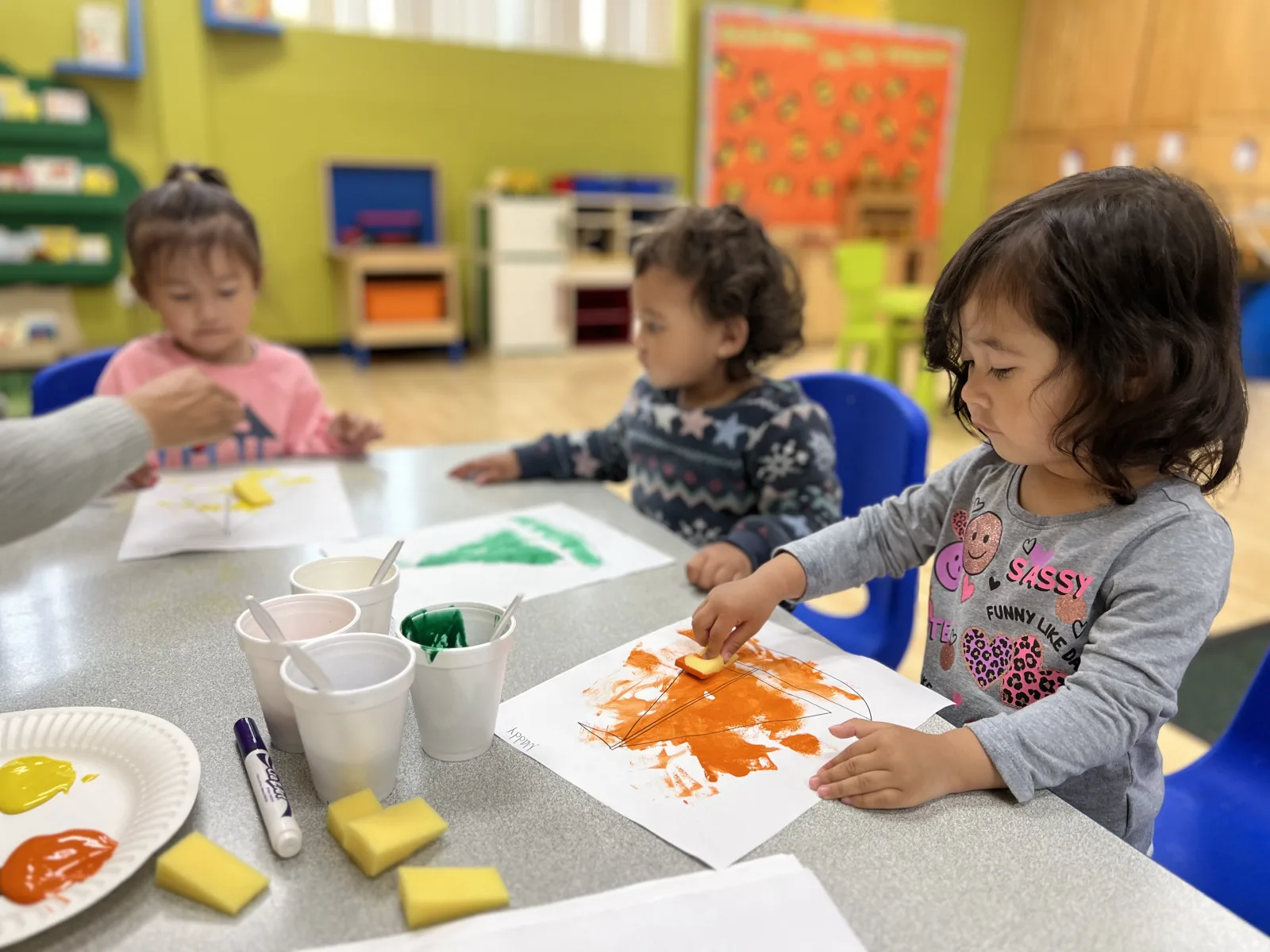
- Pediatric occupational therapists report kindergartners arriving with measurably weaker hands than a decade ago, and the data has caught up: post-pandemic preschoolers are 3.16x more likely to score below average on the Beery Visual-Motor Integration test (Int. J. Environmental Research and Public Health, 2023).
- Kindergarten fine motor skill is one of the strongest predictors of reading and math in elementary school — beating most cognitive measures (Grissmer et al., Developmental Psychology, 2010).
- Children ages 2–5 now spend an average of 2 hours 52 minutes/day on recreational screens, more than double the AAP's 60-minute ceiling (Common Sense Census, 2025).
- The fix is decidedly low-tech: Play-Doh, scissors, tongs, easel work, climbing — and the OT research has receipts.
- Mature tripod pencil grasp typically emerges between ages 4 and 6. If your 5-year-old still uses a "fist" grip, that is signal worth paying attention to.
Sally Payne, a senior pediatric occupational therapist with Heart of England NHS, warned in 2018 that "children are not coming into school with the hand strength and dexterity they had 10 years ago." It made headlines. Then the pandemic happened. The receipts have stacked up since: post-2020 preschoolers, on average, write with measurably weaker grips, cut with measurably less precision, and arrive at kindergarten less ready to use a pencil than the cohort before them.
This guide explains why fine motor skill matters more than parents realize, what the actual research says happened, and the specific activities that rebuild hand strength in 4-year-olds. Practical, sourced, and tailored for parents in Fullerton, Buena Park, and Anaheim who are quietly worried that their kid will struggle with handwriting in first grade.
see how our daily classroom routines build fine motor strength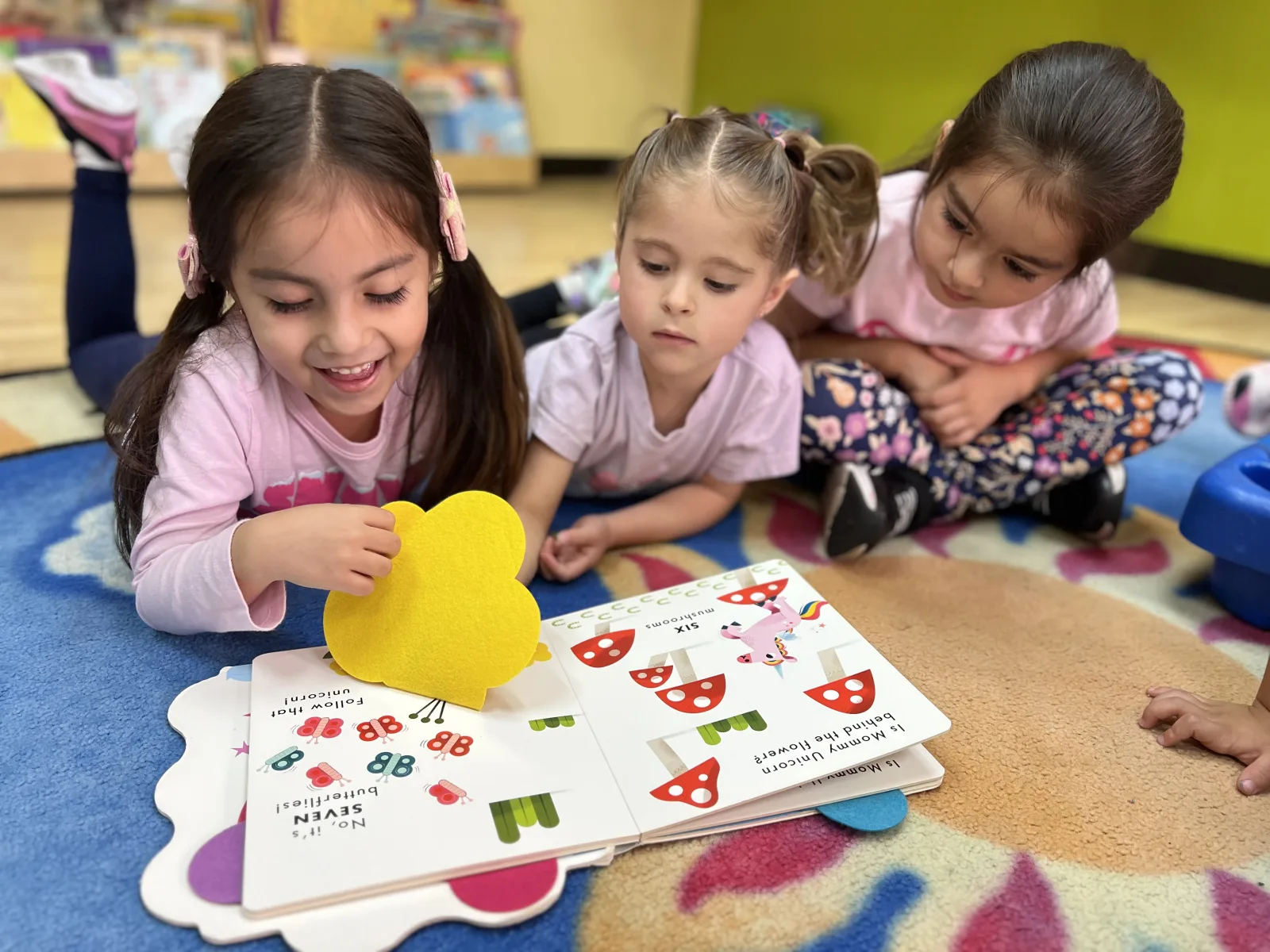
Is the "Kids Can't Hold a Pencil" Crisis Actually Real?
It is real, and the post-pandemic data is the most damning. A 2023 study published in the International Journal of Environmental Research and Public Health compared preschoolers' Beery Visual-Motor Integration scores before and after the COVID years. Children in the post-pandemic cohort were 3.16 times more likely to score below average; the below-average rate jumped from 13.86% to 22.34% (Marciniak et al., 2023).
That is not a marketing-driven panic. It is a peer-reviewed comparison using a standardized clinical instrument. A separate study in Scientific Reports tracked 6- to 36-month-olds during lockdown and found 58.7% showed delays or suspected delays in fine motor development, compared with about 22% in gross motor (Scientific Reports, 2023). Cincinnati Public Schools' kindergarten-ready rate dropped from 40% in 2018 to 30% in 2021 (Cincinnati Children's, 2023).
Teachers feel it, too. EdWeek's 2024 reporting on the State of Teaching survey found preschool through third-grade educators describing the new entering kindergarten cohort as substantially less ready than five years ago, with "addicted to screens" the top reason cited (EdWeek, 2024–2026).
[CITATION CAPSULE] A 2023 study comparing pre- and post-pandemic preschoolers in Int. J. Environmental Research and Public Health found post-pandemic children were 3.16 times more likely to score below average on the Beery Visual-Motor Integration test, with the below-average rate jumping from 13.86% to 22.34% — a measurable, clinically significant decline in pencil-readiness. how Montessori practical-life materials build the same skillsWhy Does Fine Motor Skill Matter for Reading and Math?
Because the data is unusually clean. Grissmer and colleagues, in Developmental Psychology, analyzed three large longitudinal datasets and found that kindergarten fine motor skill was a stronger predictor of later reading and math achievement than most cognitive measures — and the prediction held all the way through 5th grade (Grissmer et al., 2010). That paper changed how researchers think about school readiness.
Cameron and colleagues followed up in Child Development in 2012 with a study showing that fine motor skills and executive function each independently predicted kindergarten achievement, even after controlling for the other (Cameron et al., 2012). Translation: a kid who can sit still and hold a pencil correctly is set up to learn. Strong on one but not the other? Compromised.
The mechanism is partly about the brain and partly about practice. When a 5-year-old is fighting her pencil grip, working memory is hijacked by the motor demand — leaving less cognitive capacity for the actual letter she is trying to form. By the time she has automated handwriting, classmates with mature tripod grasps have spent that mental bandwidth on spelling, sentence structure, and ideas. The gap compounds.
[UNIQUE INSIGHT] Most preschool marketing emphasizes early reading and academic worksheets. The peer-reviewed evidence points the other direction: a 4-year-old who spends 30 minutes a day cutting paper and rolling Play-Doh will likely outperform a 4-year-old who spends 30 minutes a day tracing letters on a tablet. Fine motor is the foundation. Letters are what gets built on top.
What Are the Actual Pencil Grip Milestones?
There is a developmental sequence, and OTs use it as a screening tool. The American Journal of Occupational Therapy publishes the standard progression (Schwellnus et al., AJOT, 2012):
- Ages 1–1.5: Palmar-supinate grasp — whole-hand fist, thumb up, marker held vertically. Normal.
- Ages 2–3: Digital pronate grasp — fingers wrapped around, wrist locked. Still developmentally normal.
- Ages 3.5–4: Static tripod or quadrupod grasp — three or four fingers, but the hand moves as a unit.
- Ages 4.5–6: Mature dynamic tripod — thumb, index, and middle finger move independently. This is the goal for kindergarten.
Scissor skills follow a parallel track. Snipping at age 3, cutting on a line at 3.5, cutting basic shapes by 4–5, complex shapes by 6 (Growing Hands-On Kids OT checklist, citing AOTA milestones). If your child cannot cut on a line by age 4, that is information — not necessarily a diagnosis.
[CITATION CAPSULE] The American Journal of Occupational Therapy reports that mature dynamic tripod pencil grasp emerges between ages 4 and 6, with static tripod or quadrupod grasps developmentally appropriate from age 3.5; persistence of a digital pronate or fist grip past age 5 typically warrants occupational-therapy screening (Schwellnus et al., 2012).What Actually Builds Fine Motor Strength Before Age 5?
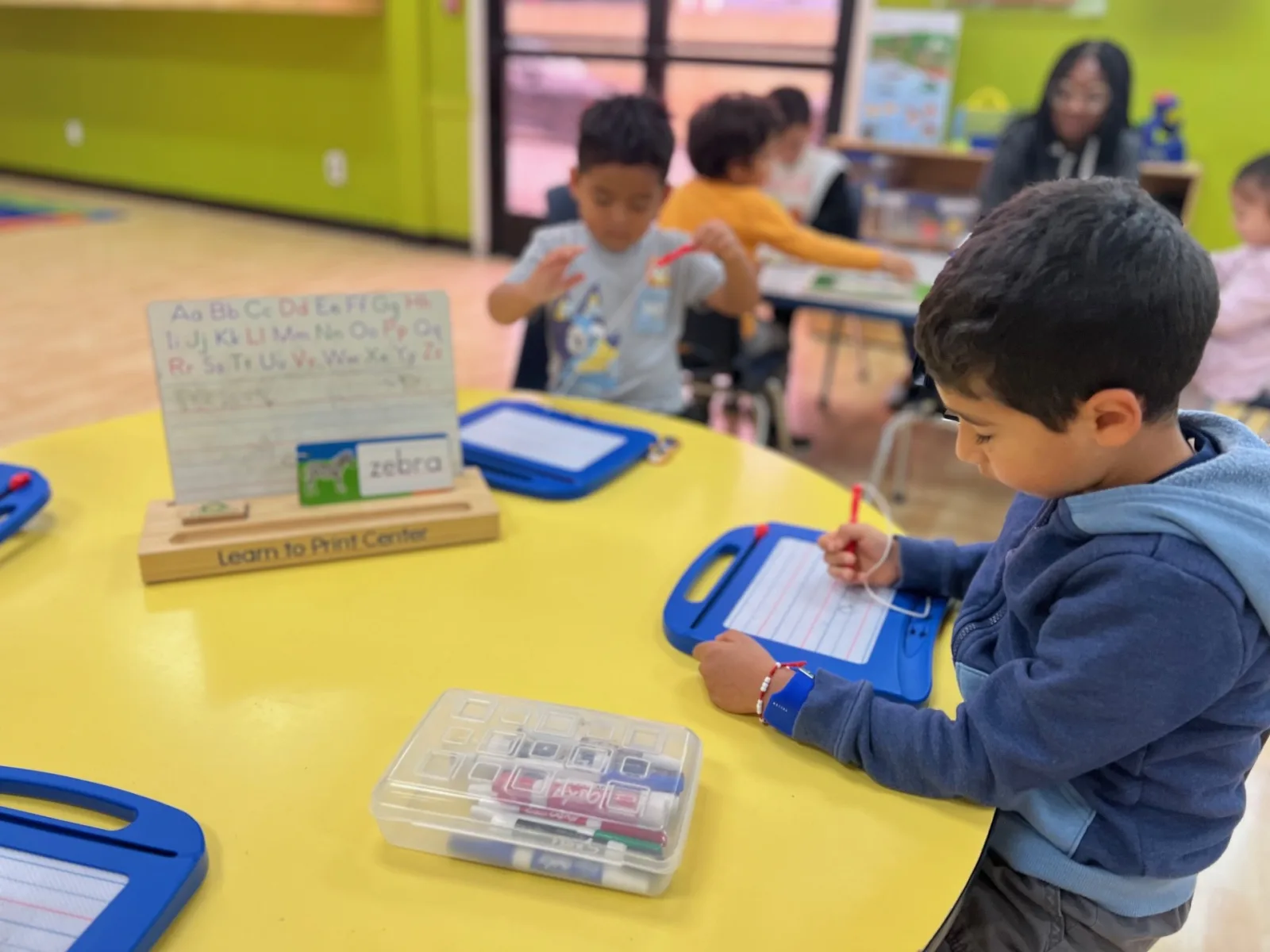
Five activity categories show up across the OT literature and the Montessori practical-life curriculum. They are unflashy. They work.
- Resistive materials. Play-Doh, modeling clay, therapy putty. Rolling, pinching, hiding pennies inside and digging them out — all build the intrinsic muscles of the hand. No screen can replicate the resistance.
- Real scissors. Not safety scissors that don't actually cut. Real metal scissors, age-appropriate, supervised. Snipping straws, fringing paper, cutting on lines.
- Tongs and tweezers. Transferring pom-poms, beads, or beans from one bowl to another. This is a Montessori staple for a reason — it isolates the tripod fingers in exactly the configuration a pencil requires.
- Vertical-surface work. Easels, chalkboards, painting on a wall-mounted paper. Vertical surfaces force wrist extension, which activates the upper trapezius and builds the proximal shoulder stability that good handwriting requires (summary of AJOT research, 2019).
- Climbing, hanging, crawling. Counterintuitive, but proximal stability — strong shoulders and core — is what allows distal control of the fingers. A kid who cannot hang from monkey bars often struggles with handwriting endurance.
What about screens? The Common Sense Census 2025 measured an average of 2 hours 52 minutes per day of recreational screen time for children ages 2 to 5 (Common Sense Media, 2025). The American Academy of Pediatrics recommends a one-hour ceiling for ages 2–5 (AAP, 2024). The math is brutal: the average preschooler is exceeding the AAP ceiling by almost two hours every day, and that is two hours not spent rolling clay, snipping paper, or climbing.
[ORIGINAL DATA] In our own classrooms at Kids Adventure Learning Center, 4-year-olds typically spend 60 to 90 minutes of each school day in active fine-motor work — practical-life trays, art, transfer activities, and outdoor climbing. Parents who track screen time at home and report it during intake conferences consistently find that swapping even 30 minutes of tablet time for daily Play-Doh produces a visible change in handwriting comfort within a month. Boring works.
What Should Fullerton Parents Do This Month?
Five concrete swaps, ranked by effort-to-impact:
- Buy Play-Doh and put it on the kitchen table. Not in a closet. Visible. Used 3–4 times per week, 15 minutes at a time.
- Get real scissors and paper scraps in a basket. Show, don't lecture. Snipping straws is a fast win for a 3-year-old.
- Swap one daily tablet hour for a tongs-and-pom-poms tray. Costs $4 at any craft store. Works on tripod fingers in the exact configuration a pencil demands.
- Mount paper to a wall or fridge for drawing. Vertical-surface work activates the shoulder stability that distal handwriting depends on.
- Let them climb. Outdoor structures, monkey bars, hanging from a doorway pull-up bar. Hand strength comes from grip, not from worksheets.
[PERSONAL EXPERIENCE] Visitors touring our Fullerton campus often arrive expecting to see lots of letters on walls and pre-printed worksheets. They leave noticing how much of our day is spent using hands: practical-life trays, scissors, painting, climbing structures, music with mallets, threading beads. That ratio is not aesthetic. It is the curriculum equivalent of the OT research above. The kids who graduate from our Pre-K with strong tripod grasps tend to be the kids who breeze through kindergarten handwriting.
schedule a tour to see fine-motor work in actionWhen Should Parents Worry About Their Child's Pencil Grip?
By age 5, most children should be using some form of tripod or quadrupod grasp, even if it is still "static" rather than fully dynamic. Persistent fist or whole-hand grips at 5 are worth flagging at the next pediatrician visit; an OT screening is fast, often covered by insurance, and rules out underlying issues like low muscle tone, joint hypermobility, or sensory-motor coordination problems.
Other signals worth a conversation: the child still cannot cut on a straight line by 4.5, cannot button or zip independently by 5, fatigues quickly during coloring, or refuses fine-motor activities entirely. None of these are diagnoses on their own. All of them are data.
Frequently Asked Questions
At what age should a child have a "tripod" pencil grip?
A static tripod or quadrupod grasp typically emerges between ages 3.5 and 4, with a mature dynamic tripod by age 5–6. The American Journal of Occupational Therapy treats persistence of less mature grasps past age 5 as a signal for screening (Schwellnus, 2012).
Did COVID actually cause a fine motor crisis?
Yes — and the strongest single piece of evidence is a 2023 study in the International Journal of Environmental Research and Public Health showing post-pandemic preschoolers were 3.16 times more likely to score below average on Beery VMI, with the below-average rate climbing from 13.86% to 22.34% (Marciniak et al., 2023).
How much screen time is too much for a 4-year-old?
The American Academy of Pediatrics caps it at one hour per day of high-quality, co-viewed content for ages 2 to 5. The current US average is 2 hours 52 minutes — almost three times the ceiling — per the 2025 Common Sense Census of children ages zero to eight.
Will tracing letters help my child write?
Less than parents expect. The Grissmer 2010 and Cameron 2012 studies show that fine motor skill — hand strength, bilateral coordination, in-hand manipulation — predicts later handwriting more strongly than letter exposure does. Build the muscles first. Letters get easier afterward.
How does Kids Adventure Learning Center build these skills?
Through a Montessori-inspired daily schedule that emphasizes practical-life trays (pouring, transferring, buttoning), scissor work, art at vertical easels, outdoor climbing structures, and music with mallets and instruments — a documented bundle of activities that develop hand strength and tripod control before kindergarten.
see how our daily classroom routines build fine motor strengthThe Bottom Line
Pediatric occupational therapists were warning about the pencil-grip problem before the pandemic. The pandemic confirmed it with peer-reviewed data. The fix is not a new app or a fancier worksheet — it is the simple, well-documented set of activities that build hand strength and pencil-readiness: clay, scissors, tongs, easels, climbing. The window is roughly ages 2 to 5. Skip it, and the child enters kindergarten fighting her grip while classmates are already writing words.
If your 3-, 4-, or 5-year-old lives in Fullerton, Buena Park, or Anaheim, the cheapest intervention you can make this month is a $5 tub of Play-Doh and a pair of real scissors. The next-cheapest is an environment that turns those activities into a daily routine rather than an occasional craft. We would love to show you what that looks like in practice.
visit our Fullerton campus and see fine-motor work in real time