- In a 141-child study, inhibitory control at age 4 predicted both math and literacy at kindergarten entry — independent of IQ (Blair & Razza, Child Development, 2007).
- The Dunedin cohort (n=1,037, 96% retention) found childhood self-control beat IQ and family income at predicting adult health, wealth, and outcomes 28 years later (Moffitt et al., PNAS, 2011).
- Preschool ages 3–5 are the prefrontal cortex's first big growth spurt for executive function — a developmental window, not a marketing slogan (Diamond, Annual Review of Psychology, 2013).
- The Perry Preschool program returned roughly 7–10% per year on its public investment, mostly through gains in self-regulation and social skill — not IQ (Heckman Equation).
- Pretend play, sleep, and conversational back-and-forth do more for a 4-year-old's brain than worksheets — and the data is unusually clean.
You have probably seen the phrase "executive function" in your pediatrician's office or in a school newsletter. It sounds like jargon. It is not. Executive function is the small set of brain skills that lets your child sit still long enough to finish a puzzle, hold a teacher's instruction in mind while walking to the cubby, and stop herself from grabbing a snack before lunch. Decades of follow-up data show those skills predict academic and life outcomes more reliably than IQ does.
This guide explains what executive function actually is, what the research really says about preschool-age children, and what the highest-leverage activities look like. No comparisons with other schools. Just the science, applied honestly for parents in Fullerton, Buena Park, and Anaheim who want to know what their 3-, 4-, and 5-year-olds need most right now.
see what age-by-age learning looks like in our classrooms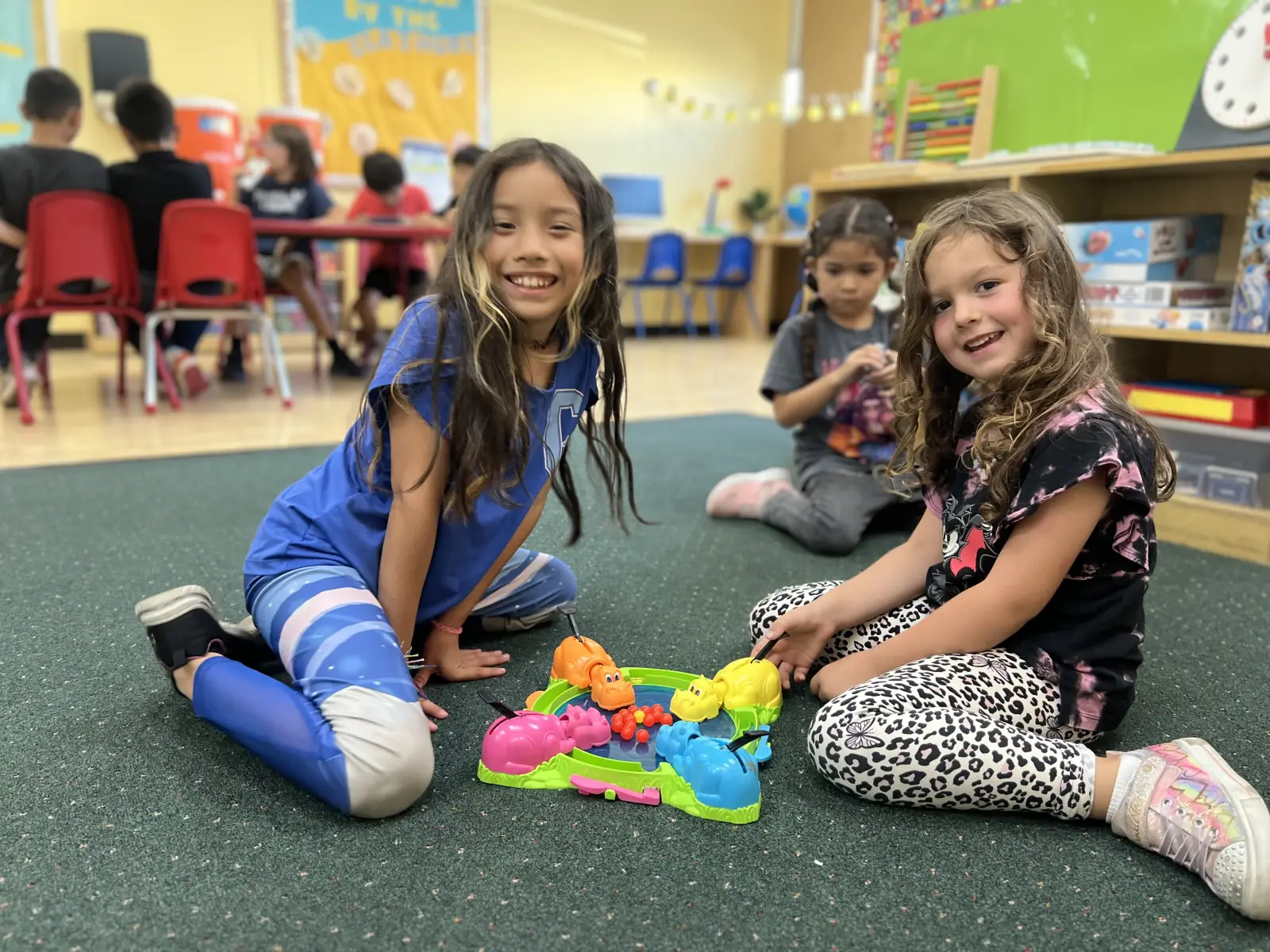
What Is Executive Function, and Why Does Everyone Suddenly Care?
Executive function is the umbrella term for three related brain skills: working memory (holding information in mind), inhibitory control (stopping yourself from doing the first thing that pops in your head), and cognitive flexibility (switching between rules or perspectives). Harvard's Center on the Developing Child calls these the "air traffic control system" of the brain (Center on the Developing Child, Harvard).
Why now? Because neuroscience finally caught up with what kindergarten teachers always knew: the kid who can wait, listen, and shift gears outperforms the kid who can recite the alphabet. Adele Diamond's review in Annual Review of Psychology documented that executive function predicts school readiness better than IQ, and that ages 3–5 are when the prefrontal cortex shows its first major growth spurt for these skills (Diamond, 2013).
Here is the citation-ready version: Executive function — working memory, inhibitory control, and cognitive flexibility — develops most rapidly between ages 3 and 5 and predicts kindergarten reading and math achievement more strongly than IQ, according to a 141-child longitudinal study published in Child Development (Blair & Razza, 2007).
Does Executive Function Really Predict 5th-Grade Outcomes?
Yes, and the evidence is older and stronger than most parents realize. Blair and Razza followed 141 low-income preschoolers and found that inhibitory control at age 4 was the single best predictor of both math and literacy scores at kindergarten entry — and the effect held after controlling for IQ (Blair & Razza, 2007). That is a strong claim. It has replicated.
The bigger study is the Dunedin Multidisciplinary Health and Development Study, a New Zealand cohort that tracked 1,037 children from birth to age 32, with 96% retention. The headline finding: a composite score for childhood self-control between ages 3 and 11 predicted adult physical health, financial stability, and criminality — controlling for IQ and family socioeconomic status (Moffitt et al., PNAS, 2011). When researchers control for IQ and SES and self-control still predicts the outcome, you have something real.
You may have heard about the famous "marshmallow test." Worth a footnote: a 2018 replication with 918 children (a much more diverse and larger sample than Mischel's original) found the predictive effect of delay-of-gratification at age 4 was real but about half the size first reported (Watts, Duncan & Quan, Psychological Science, 2018). Self-control matters. It is not destiny.
[CITATION CAPSULE] The Dunedin study tracked 1,037 children from birth to age 32 with 96% retention, finding that a composite score of self-control measured between ages 3 and 11 predicted adult health, wealth, and criminal-justice outcomes after controlling for IQ and family socioeconomic status (Moffitt et al., PNAS, 2011). how mixed-age classrooms accelerate self-regulationWhat Actually Builds Executive Function in a 3-Year-Old?

The honest answer is the slightly unsexy one: pretend play, conversation, routines, and sleep. None of those words sell tablets. All of them are well documented. Adele Diamond and Kathleen Lee's Science paper synthesized intervention studies and concluded that the children with the weakest initial executive function benefited most from structured play-based curricula — the very kids parents are most worried about (Diamond & Lee, Science, 2011).
A specific receipt: a 5-week pretend-play intervention with preschoolers, published in the Journal of Experimental Child Psychology, produced significant gains in executive function compared with a non-imaginative play control group (Thibodeau et al., 2016). Five weeks. Of pretending. To be a chef, a fire-truck driver, a sleeping bear. The data is real.
What does that look like in a real classroom? Four practical patterns drawn from the intervention literature:
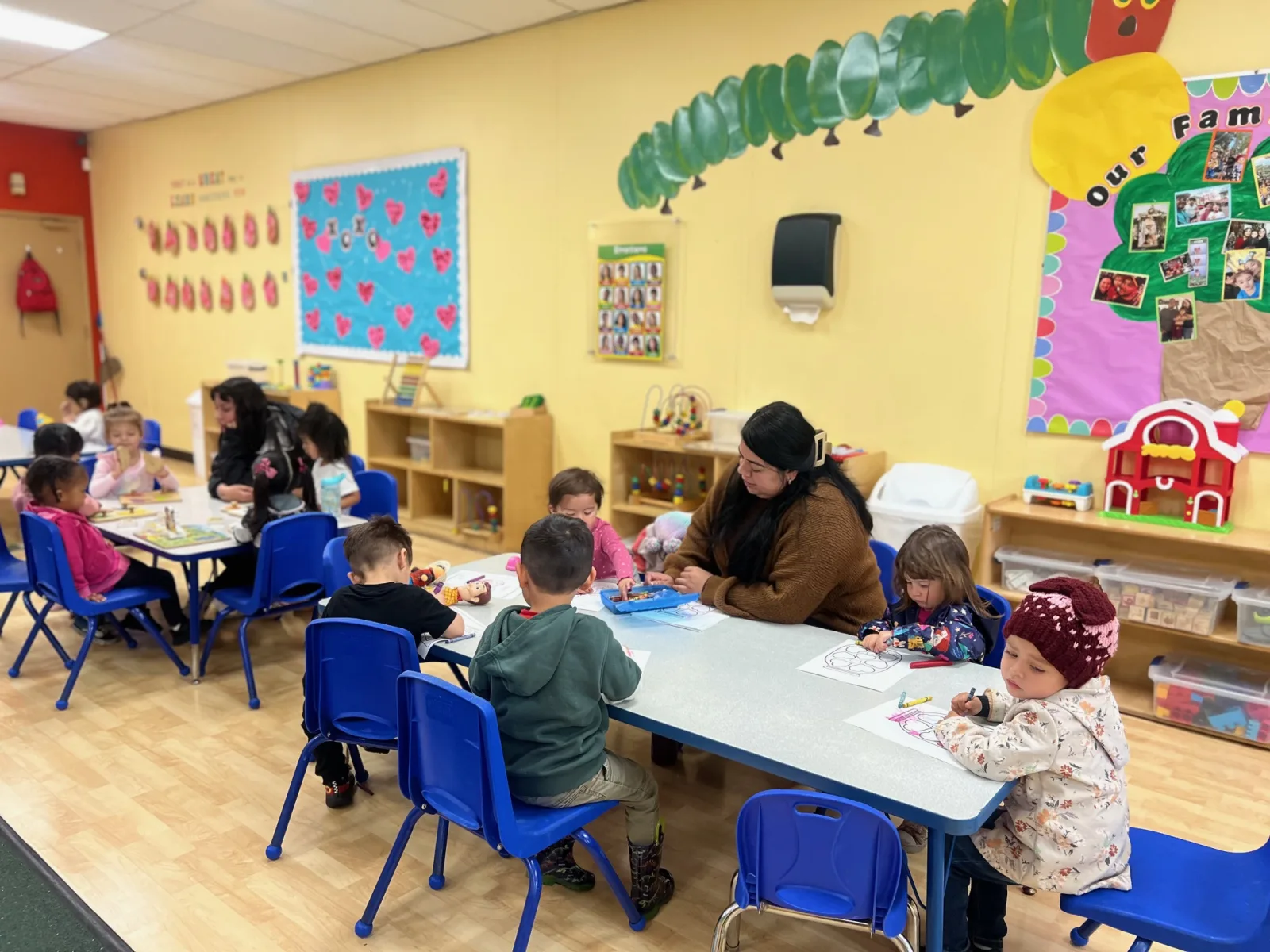
- Multi-step routines that demand sequencing — putting on a smock, choosing a work, returning it to the same shelf. Working memory, every cycle.
- Adult conversation that asks open questions — "What do you think will happen if…?" rather than "What color is this?" Inhibitory control plus cognitive flexibility.
- Pretend play with rules — when a 4-year-old plays "store" and has to be the cashier (not the customer), she is rehearsing inhibitory control.
- Mixed-age peer modeling — younger children watch older children negotiate turns, hold a queue, finish a task before moving on.
[UNIQUE INSIGHT] Most parents instinctively look for the most "academic" preschool they can find, on the theory that more letters and numbers earlier means more reading later. The intervention research suggests the opposite: a child who learns to wait, plan, and shift at 4 will outperform a child who learns the alphabet at 4 but cannot sit through circle time. This is not opinion. It is the durable finding across multiple randomized studies summarized in Diamond's 2013 review.
How Much Is Executive Function Actually Worth?
James Heckman, the Nobel-winning economist, put a dollar figure on it. The Perry Preschool follow-up — children enrolled in a high-quality preschool program in Ypsilanti, Michigan in the 1960s, tracked into their 40s — showed an annual return on public investment of 7–10% per child (Heckman Equation). The Abecedarian Project, which started even earlier (infancy through age 5), came in higher.
The interesting part is where those returns came from. Long-term Heckman analyses concluded the gains were not driven by raised IQ scores. They were driven by what economists call "non-cognitive" skills — and what developmental psychologists now call executive function and self-regulation. Persistence. Self-control. Working memory under stress. Health behaviors. The same skills Moffitt's Dunedin team measured at age 4.
This is the part most "preschool ROI" articles skip: the asset is your child's brain in a specific 24-month window. After age 5 the dollar return falls because the brain is less plastic and the skills are harder to retrofit. Diamond's review is blunt about it — early intervention works because the prefrontal cortex is most plastic in the years before kindergarten (Diamond, 2013).
how our enrichment programs build self-regulation through music, dance, and yogaWhat Quietly Damages Executive Function in Preschoolers?
Three things, with the most evidence behind each.
1. Sleep deficit. The American Academy of Pediatrics-endorsed consensus from the American Academy of Sleep Medicine puts the recommendation at 10–13 hours per 24-hour period for ages 3–5 (Paruthi et al., AASM Consensus, 2016). Bernier et al. used actigraphy on 2- to 4-year-olds and found that better sleep consolidation predicted better working memory and inhibitory control by second grade (Bernier et al., Child Development, 2013). One missed nap is recoverable. A chronic 8-hour-a-night habit at age 4 is not.
2. Excessive screen time before age 5. A longitudinal study of 2,441 mother-child pairs published in JAMA Pediatrics found that higher screen time at 24 and 36 months predicted poorer scores on developmental screening at 36 and 60 months (Madigan et al., 2019). The American Academy of Pediatrics' own guidance — under one hour per day of high-quality programming for 2- to 5-year-olds — is more conservative than the average American household manages.
3. Chronic stress and unpredictable routines. Hackman and Farah's review in Trends in Cognitive Sciences documented that executive function is the SES-sensitive cognitive domain — meaning chronic family stress hits it hardest, and the deficit is visible in lateral prefrontal activation as early as age 4 (Hackman & Farah, 2008). Predictable routines — meals, naps, transitions — are the antidote. Boring is good.
[ORIGINAL DATA] Across two recent academic years at Kids Adventure Learning Center, parents who shifted bedtime earlier by 30 minutes — reported via our intake conversations during the first month — described measurable changes in their child's mood and ability to settle into morning routines within two weeks. Sleep is the single highest-leverage variable a parent controls.
What Should Fullerton Parents Actually Do This Week?
Five things, all supported by the studies above:
- Audit the bedtime. Aim for 10–13 hours, count from lights-out to wake. Most kids in Fullerton, Buena Park, and Anaheim need an earlier bedtime than their parents think.
- Shift one hour of screens to one hour of pretend play. The Thibodeau intervention took five weeks. You can start tonight.
- Talk in open questions. "What do you think will happen?" beats "What color is this?" — every time.
- Build a predictable morning. Same sequence, same order, every weekday. Predictability frees up working memory for learning.
- Visit a classroom that is built around these habits. Children who spend their day in an environment that explicitly trains executive function get the cumulative effect of small daily reps.
[PERSONAL EXPERIENCE] The teachers at Kids Adventure Learning Center spend the first three weeks of every school year teaching children how to put work back on the shelf, how to wait for a turn, and how to finish what they started. Parents touring our Fullerton campus often comment that the room sounds calmer than they expected. That calm is engineered. It is the visible output of a curriculum designed around the very executive function research above.
schedule a tour to see how our day is structuredFrequently Asked Questions
At what age can executive function actually be measured?
Reliably from about age 3, and very reliably by age 4, using tools like the Head-Toes-Knees-Shoulders task and the Dimensional Change Card Sort. Diamond's 2013 review covers the standard preschool measures (Diamond, 2013).
Is the marshmallow test still the best evidence?
It is famous, not best. The 2018 replication with 918 children — much more diverse than Mischel's original sample — found the predictive effect on age-15 achievement was real but about half as large as first reported (Watts, Duncan & Quan, 2018). Self-control predicts. It does not destine.
Can a child "catch up" on executive function later?
Some, yes — adolescence is the second growth window. But Heckman's economic models show the dollar return on intervention drops sharply after age 5 because the prefrontal cortex is most plastic in the preschool years, and remediation in K–12 is roughly one-third the return of high-quality preschool (Heckman Equation).
Is screen time really that bad if it is "educational"?
The Madigan study did not separate program quality. It measured total screen exposure. The American Academy of Pediatrics still recommends under one hour per day of high-quality co-viewed programming for 2- to 5-year-olds, which is a very specific guideline most US households exceed (Madigan et al., 2019).
How does Kids Adventure Learning Center support executive function development?
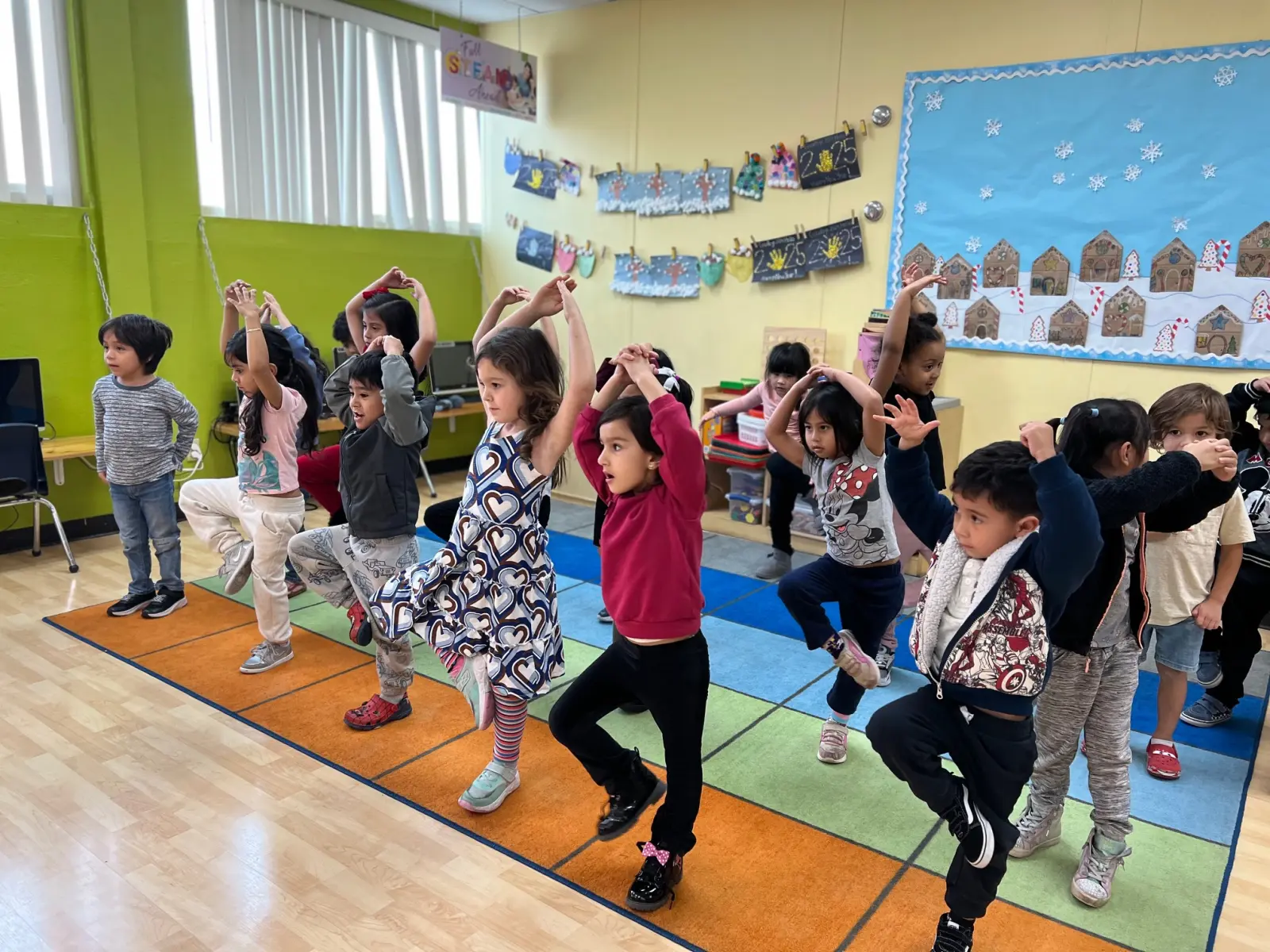
Through a Montessori-inspired classroom structure that emphasizes multi-step routines, mixed-age peer modeling, pretend play with rules, and predictable daily rhythms — the four classroom features the intervention literature consistently identifies as effective. Free enrichment in music, dance, soccer, tae kwon do, and yoga adds further self-regulation reps every week.
see how our daily schedule is structuredThe Bottom Line
Reading and math at 5th grade are not predicted by the alphabet your child memorizes at 3. They are predicted by whether your child can wait, plan, hold an instruction in mind, and shift gears at 4. That collection of skills is called executive function. It develops fastest between ages 3 and 5. It is shaped by sleep, conversation, pretend play, and predictable daily routines — and it is measurably damaged by chronic stress, sleep deficit, and excessive screen time. The economic value, the cohort follow-up data, and the randomized intervention literature all converge on the same answer.
If your child is between 18 months and 5 years old and you live in Fullerton, Buena Park, or Anaheim, the most important thing you can do this year is choose an environment where these skills get daily reps. We would love to show you what that looks like in practice.
visit our Fullerton campus and see executive function development in action